
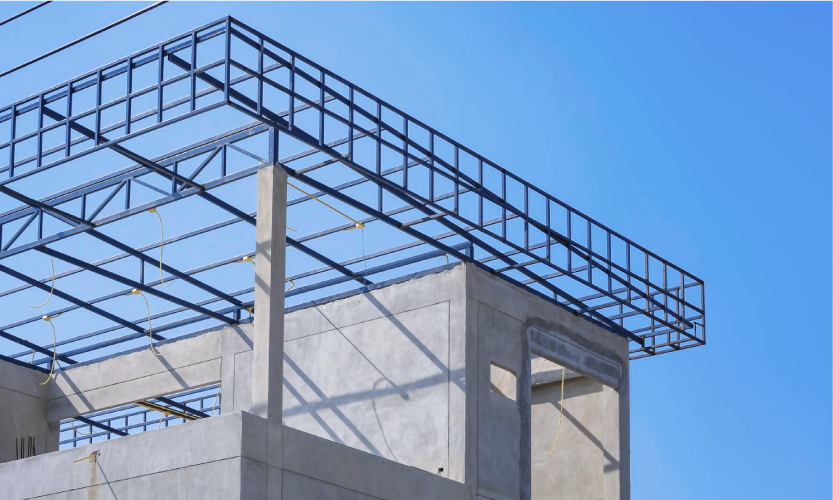
Advanced steel-concrete composite solutions engineered to maximize structural strength, stiffness, efficiency, and long-term performance.
Steel-concrete composite structures are based on the combined action of two materials with complementary mechanical properties: steel resists tensile forces, while concrete performs primarily in compression. By acting together as a single structural system, they provide significantly greater strength and stiffness than conventional single-material solutions.
This technology is widely used in mezzanine floors, industrial flooring systems, long-span structural systems, and multi-storey steel buildings, where high load-bearing capacity and minimal deflection are essential.
The interaction between steel and concrete is achieved through specially designed mechanical shear connectors, enabling full or partial composite action. As a result, the structure behaves as a unified structural system, with optimized stress distribution and enhanced resistance to loads, vibrations, and seismic forces.
Composite systems also offer reduced self-weight compared to conventional reinforced concrete solutions, enabling larger spans with smaller cross-sections and contributing to the reduction of overall floor-to-floor heights. This provides direct benefits for architectural design flexibility and the integration of MEP (Mechanical, Electrical & Plumbing) installations.
Furthermore, the use of prefabricated elements and structural steel sections substantially reduces construction time, making composite structures an efficient and reliable choice for high-demand industrial, commercial, and specialized engineering projects.
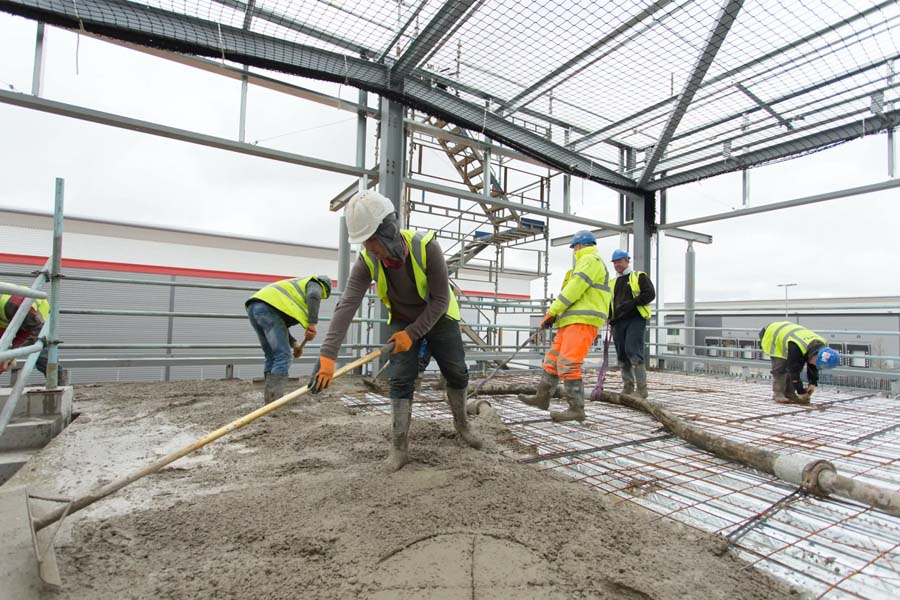
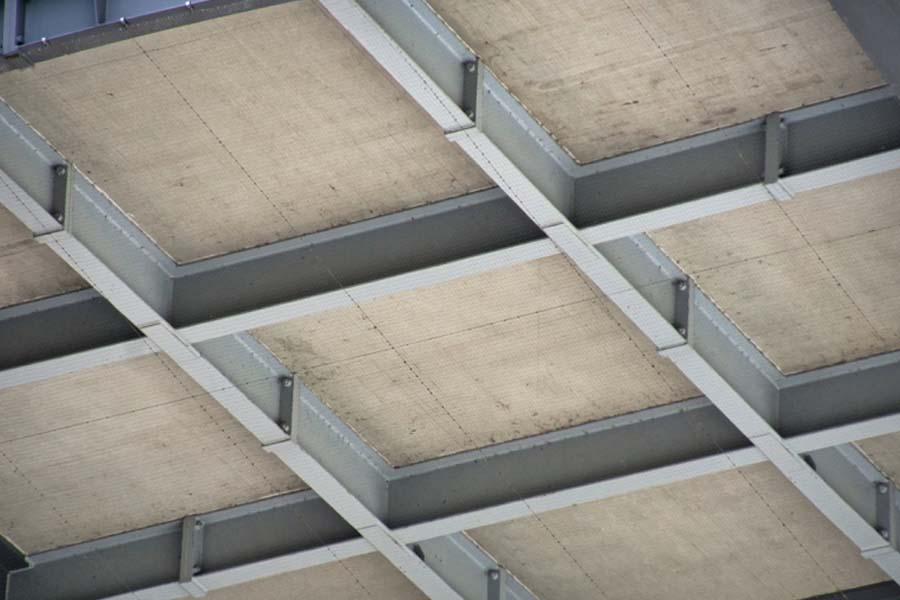
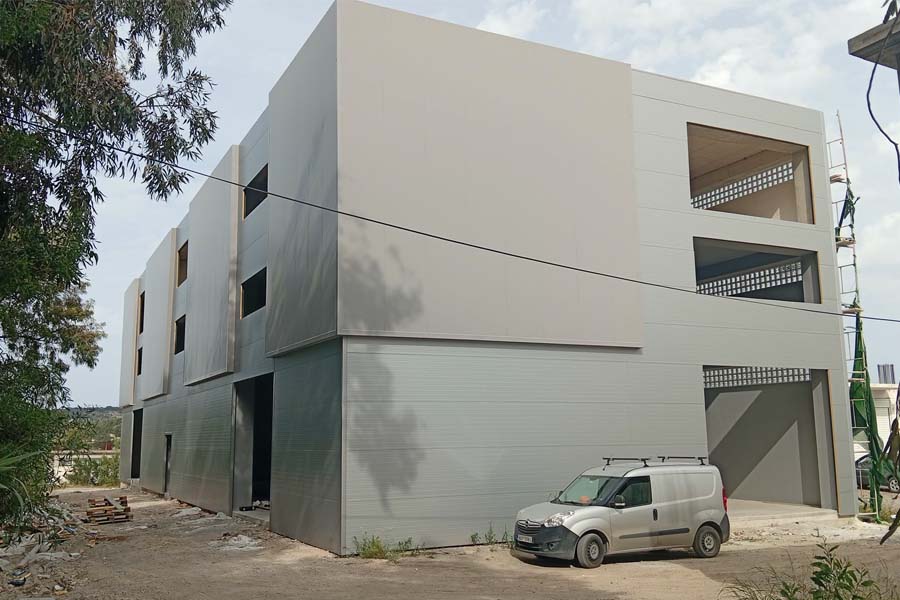
Composite Structures Examples:
Applications:
- Industrial Facilities & Warehouses
- Industrial Heavy-Duty Flooring Systems
- Shopping Centers & Multi-Storey Car Parks
- Bridges & Overpasses
- Building Upgrades & Improvements